2026-09-21
[Gynecomastia Surgery Recovery] How Long Should You Wear a Compression Garment? Is It Really Necessary? - On Swelling and Lymphatic Flow
Surgeon Dr. Sung-il Cho explains how long to wear compression garments after gynecomastia surgery and the medical mechanisms behind post-op swelling and lymphatic drainage.
![[Gynecomastia Surgery Recovery] How Long Should You Wear a Compression Garment? Is It Really Necessary? - On Swelling and Lymphatic Flow](/uploads/clinicsung1/224418314524/0f723f0dcf0c33c8.png)
Hello. I am surgeon Dr. Sung-il Cho.
To answer the question right away: a compression garment is typically worn for about 2 weeks, though it may be worn for up to 4 weeks depending on the extent of liposuction performed.
When swelling gradually increases in the surgical area a few days after surgery, many patients worry: "Could something have gone wrong with the surgery?" or "Will this swelling turn into permanent fat?"
However, postoperative swelling (edema) is fundamentally different from the everyday puffiness caused by high sodium intake or fatigue. It is a completely normal physiological healing signal indicating that your body's immune and vascular systems are actively working to repair damaged tissues.
Today, let's explore the medical principles behind why swelling occurs after surgery.
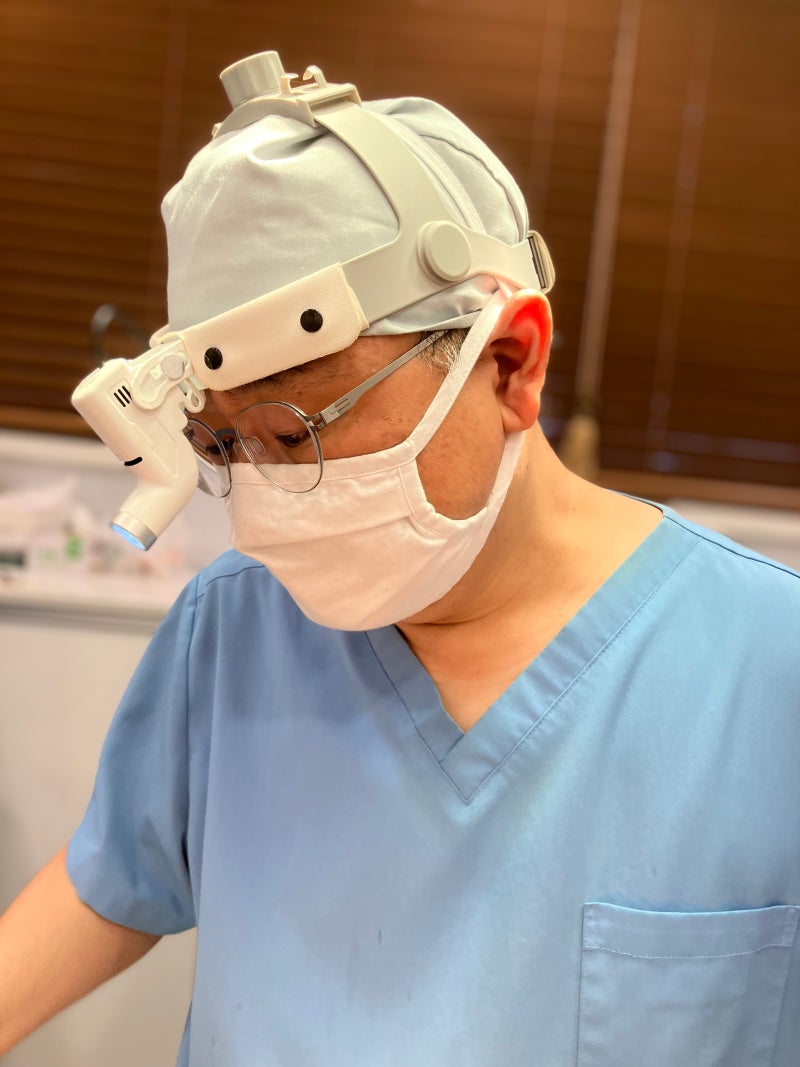
Why Does Swelling Occur After Surgery?
During gynecomastia surgery, excess glandular tissue and fat are excised. In this process, countless microscopic lymphatic vessels and capillaries that are invisible to the naked eye also experience temporary irritation and disruption.
Temporary Disruption of Microlymphatic Vessels: Lymphatic vessels act as the body's "drainage system," recovering waste products and excess fluid. Immediately after surgery, the temporary severance of these microscopic lymphatic pathways narrows the channels through which fluid normally drains.
Accumulation of Interstitial Fluid: To heal the wound, your body increases blood flow to the area, concentrating nutrients and immune cells. During this process, capillary permeability rises, causing fluid to leak into the spaces between cells (the interstitium) and accumulate. This fluid collection is what we visually recognize as "swelling (edema)."
In other words, postoperative swelling is a natural phenomenon where fluid temporarily pools while tissues are recovering.
How Compression Garments Reduce Swelling
For pooled interstitial fluid in the surgical area to clear quickly, it must be reabsorbed into blood and lymphatic vessels and transported toward the heart. Medical compression garments serve as physiological aids that accelerate this fluid reabsorption process.
1. Starling's Law
In medicine, "Starling's Law" describes the principles governing fluid movement between blood vessels and surrounding cells. Fluids naturally flow from areas of higher pressure to areas of lower pressure.
When a compression garment applies uniform external pressure to the chest and axillary tissues, it increases the pressure in the spaces between cells (tissue hydrostatic pressure). This elevated pressure actively drives the pooled interstitial fluid back into the lymphatic vessels and capillaries, where pressure is comparatively lower.
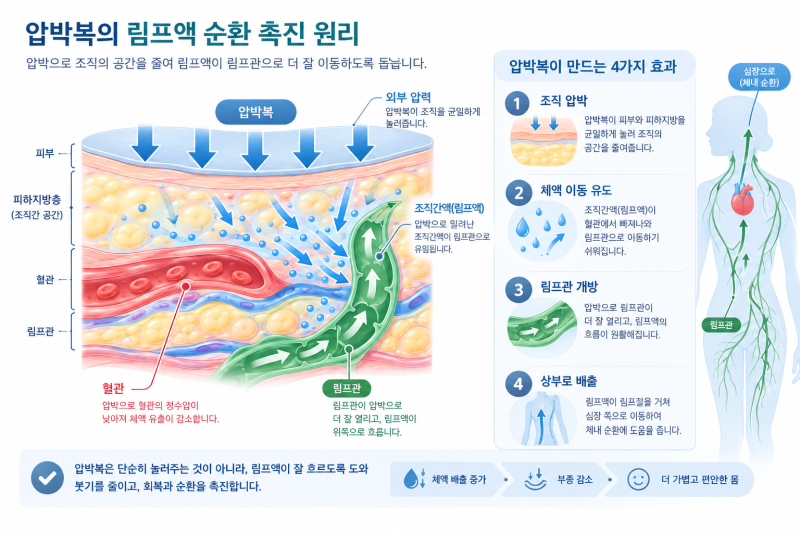
2. Assisting the Lymphatic Pumping Function
Lymphatic vessels lack strong inherent pumping power, relying instead on external pressure changes to move lymphatic fluid. When a compression garment delivers appropriate, steady pressure around joints and muscles, it prevents lymphatic vessels from over-dilating. This prevents backflow and opens the drainage pathways so lymph can flow smoothly upward toward the heart.
The Power of Compression in Supporting Healing
Postoperative swelling is never a complication to fear; it is simply a stage of healing during which your body reconstructs tissue and restores equilibrium.
Although wearing a compression garment can feel tight and uncomfortable, please remember that it serves as a protective shield supporting your body until it fully regains its natural function.
※ This post was prepared based on the lymphatic circulation physiology and postoperative edema management guidelines found in "Guyton and Hall Textbook of Medical Physiology" and leading surgical textbooks.
[Textbook and Literature References]
Guyton and Hall Textbook of Medical Physiology (14th Edition)
Chapter: The Microcirculation and Lymphatic System: Capillary Fluid Exchange, Interstitial Fluid, and Lymph Flow
Application: Physiological basis of Starling's forces demonstrating that increasing external physical pressure (tissue hydrostatic pressure) promotes interstitial fluid reabsorption into capillaries and lymphatic vessels.
Bland and Copeland's The Breast: Comprehensive Management of Benign and Malignant Diseases
Chapter: Surgical Technique and Postoperative Care / Management of Lymphedema
Application: Supports the clinical rationale for compression therapy and the mechanism of edema secondary to microlymphatic disruption after breast and axillary tissue resection.
Lymphatic Drainage and Edema Control in Plastic and Reconstructive Surgery
Journal Reference: Plastic and Reconstructive Surgery Journal Review
Application: Literature evidence indicating that progressive external compression therapy following body contouring surgery accelerates lymphatic clearance and shortens the duration of acute postoperative edema.
Frequently Asked Questions
How long should I wear a compression garment after gynecomastia surgery?
It is usually worn for around 2 weeks, and up to 4 weeks depending on the extent of liposuction. The garment provides external tissue support to ensure stable recovery until the treated area regains its normal function.
Why does swelling develop after gynecomastia surgery?
It occurs because fluid pools during the natural tissue healing process. During surgery, microlymphatic pathways are temporarily disrupted and capillary permeability increases, leading to fluid accumulation in the interstitial spaces between cells.
How does a compression garment help reduce swelling?
It promotes fluid reabsorption through external pressure. In accordance with Starling's Law, when the garment applies even pressure to the tissues, the increased tissue pressure drives the pooled interstitial fluid back into lymphatic vessels and capillaries.
Is a compression garment essential for postoperative lymphatic circulation?
Yes, it is vital to assist lymphatic drainage. Because lymphatic vessels lack strong self-contracting power, steady external pressure helps regulate vessel diameter, preventing backflow and facilitating upward flow toward the heart.