2026-09-14
[Gynecomastia Recovery] Understanding Dead Space: How Does the Skin Reattach?
An explanation of dead space after gynecomastia surgery, the biological process of skin adhesion to fascia, and how compression garments prevent seroma formation.
Hello. I am General Surgeon Dr. Sung-il Cho.
In the previous post, I explained the principles of hemostasis during the first 48 hours post-op and how compression garments help prevent bleeding. (Link https://blog.naver.com/clinicsung1/224406733372)
Starting from days 2 to 3 after surgery, as the risk of bleeding gradually decreases, another vital recovery response begins in our body: the process of tissue adhesion, where the skin firmly reattaches to its underlying foundation to close up the empty cavity left behind.
Today, I will explain the essential anatomical concept of "Dead Space" following gynecomastia surgery and the physiological principles behind how the skin reattaches.
Where Tissue Has Left: What is 'Dead Space'?
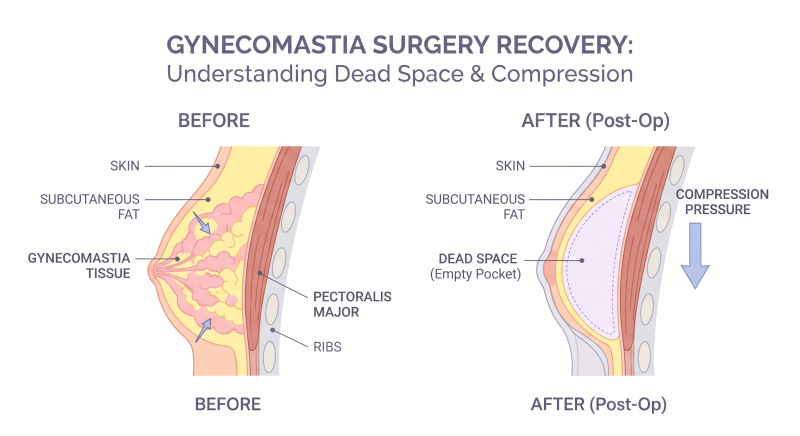
Gynecomastia surgery involves making an incision and excising excessive glandular tissue and fat layers nestled underneath the skin.
Once the problematic tissue is removed from the body, an empty void inevitably remains between the skin (the roof) and the pectoralis major fascia (the floor). In medicine, an abnormal empty space created within body tissues due to surgery or trauma is referred to as "Dead Space."
The Body Dislikes Empty Space: The Formation of Seroma
The human body instinctively does not tolerate empty voids remaining inside it.
If dead space beneath the skin is left unaddressed, the body continuously channels blood, lymphatic fluid, and inflammatory exudates to fill this void. Just as standing water forms a puddle, fluid accumulating in dead space to create a fluctuant cyst-like pocket is called a "Seroma." When a seroma develops, the surgical site bulges again, recovery is prolonged, and severe cases may lead to infection. Therefore, eliminating this dead space is just as crucial as hemostasis to ensure successful surgical outcomes.
How Does the Skin Reattach to the Base?: Physical Compression and Adhesion
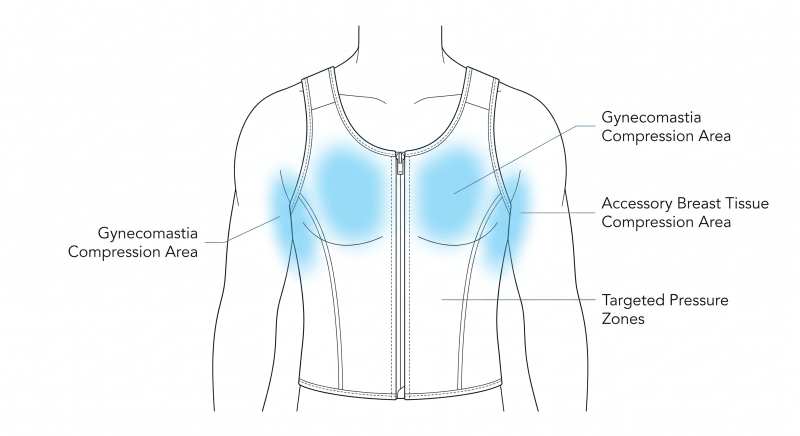
The most definitive way to prevent seromas and eliminate dead space is by applying firm pressure to press the skin (roof) against the deep fascia (floor), keeping the two layers in direct physical contact. This is precisely where the compression garment serves its second crucial role. When the garment presses the skin securely against the fascia, a remarkable biological bonding process unfolds between the two contacting tissue surfaces.
Bridging: Microvessels sprout across the contacting skin and fascia, creating bridges to deliver nutrients.
Fibroblast Activation: Fibroblasts—the key healing cells—gather actively, weaving dense spiderweb-like strands of collagen fibers that serve as a natural tissue glue.
Tissue Fusion (Adhesion): These collagen fibers firmly knit the skin tissue and fascia together, ultimately establishing a smooth, flat chest (or underarm) contour without leaving any empty spaces.
The Compression Period That Determines a Clean Contour
It generally takes several weeks for the skin to fully adhere to the underlying fascia and achieve stable tissue bonding.
If you arbitrarily loosen or frequently take off your compression garment during this window, the loosely bonded skin can separate, reopening the dead space and allowing fluid to pool. The compression garment serves as the structural mold that helps the surgical area heal smoothly and firmly.
Even if wearing the garment feels cumbersome, please remember that this is a wondrous process during which your skin cells are diligently producing collagen to restore your natural chest contour.
※ This article was written based on wound healing mechanisms and dead space management guidelines from leading plastic and general surgery textbooks, including "Grabb and Smith's Plastic Surgery."
[Textbook and Literature References]
Grabb and Smith's Plastic Surgery (8th Edition)
Pathophysiology of Seroma Formation and Its Prevention (Medical Journal Review)
Frequently Asked Questions
What is 'Dead Space' after gynecomastia surgery?
It refers to the empty cavity inevitably left between the skin and the pectoralis major fascia after glandular tissue and fat are surgically excised. Because the human body cannot tolerate hollow internal spaces, leaving dead space uncompressed can cause fluid accumulation (seroma), making physical elimination of this space essential.
What causes a seroma to form at the surgical site?
A seroma forms when body fluids like lymph or inflammatory exudates leak into the remaining internal void (dead space) to fill it. When fluid pools, the chest becomes swollen or fluctuant, delaying healing and increasing infection risk; thus, keeping the tissue layers closely bonded is vital.
How does the biological adhesion process occur to reattach the skin?
Once the skin and fascia are pressed together, microvessels bridge the gap, and fibroblasts actively secrete collagen. These collagen fibers act like natural adhesive threads, knitting the two tissue surfaces together into a flat, well-defined, and fully attached contour.
Why must I wear a compression garment consistently after gynecomastia surgery?
It must be worn to firmly press the skin against the fascia, eliminating dead space and preventing seroma formation. Complete, stable skin adhesion usually takes several weeks, and taking off or loosening the garment prematurely can cause tissues to detach and allow fluid to accumulate.